


Winter Warriors: Finding the Best Electric Cars for Snow and Ice
Winter driving presents unique challenges, and if you’re considering making the switch to electric, you might be wondering how EVs handle snowy roads and freezing temperatures. The good news is that modern electric vehicles have come a long way in cold-weather performance. While it’s true that batteries lose some efficiency in the cold, many of today’s best electric cars for snow come equipped with features that make them surprisingly capable winter companions. From instant torque delivery that helps with traction control to lower centers of gravity that improve stability, electric vehicles offer distinct advantages when the roads get slippery.
Key Takeaways:
- Electric cars can perform well in winter with proper preparation and the right features.
- Battery range typically decreases by 20-40% in cold weather conditions.
- All-wheel drive systems and winter tires are essential for optimal snow performance.
- Heat pumps help preserve battery range during cold months.
- Ground clearance and weight distribution significantly affect snow driving capability.
Free PDF Download Best Electric Cars for Snow
Best_Electric_Cars_Snow_2PageUnderstanding How Electric Vehicles Handle Winter Conditions
Electric cars face unique challenges during winter months, but they also bring several advantages to the table. The battery pack, which sits low in the chassis, creates a lower center of gravity compared to traditional gas-powered vehicles. This design feature actually enhances stability on slippery surfaces, making it easier to maintain control when roads are covered with snow or ice.
The instant torque delivery from electric motors provides precise power control, which is beneficial when navigating through challenging winter conditions. Unlike internal combustion engines that need to build up power, electric motors can adjust torque output millisecond by millisecond, working seamlessly with traction control systems to prevent wheel spin. This responsiveness makes the best electric car for snow and ice particularly effective at maintaining grip on treacherous surfaces.
However, cold temperatures do affect battery chemistry. Lithium-ion batteries perform less efficiently when temperatures drop below freezing, which means you’ll notice a reduction in driving range. Most electric vehicles experience a range decrease of 20-40% in severe winter conditions, though this varies depending on the model and how the vehicle is used.
Why Range Decreases in Cold Weather
Battery performance isn’t the only factor affecting winter range. When you turn on the cabin heater, it draws significant power from the battery pack. Traditional vehicles waste so much energy as heat from their engines that heating the cabin is essentially free, but electric cars need to use battery power specifically for heating.
Pre-conditioning your vehicle while it’s still plugged in can help minimize this impact. Many electric vehicles allow you to warm up the cabin and battery before you unplug, using grid electricity instead of battery power. This simple habit can add 10-20% more usable range to your winter drives.
Quick Tip: Always charge your EV to 100% before long winter trips, and plan for stops at fast-charging stations along your route to avoid range anxiety.
Top Features to Look for in Winter-Ready Electric Cars
When shopping for the best electric car for driving in snow, certain features make a significant difference in performance and safety. All-wheel drive should be at the top of your priority list. Having motors on both axles provides superior traction compared to single-motor configurations.
Ground clearance is another critical consideration. While many electric cars sit relatively low to the road, crossovers and SUVs offer extra clearance that helps you navigate through deep snow without getting stuck. Models with at least 8 inches of ground clearance tend to handle winter conditions more confidently.
Heat pump technology deserves special mention. EVs with heat pumps use significantly less battery power for cabin heating compared to traditional resistive heating elements. This feature alone can preserve 15-25% more range during cold weather, making it one of the most valuable options for winter driving.
Expert Tip: Pairing your electric vehicle with a dedicated set of winter tires provides more traction improvement than any electronic system. The rubber compounds in winter tires remain flexible in freezing temperatures, maintaining grip when all-season tires become rigid and less effective.
Best Rated Electric Vehicles for Snow Performance
Tesla Model Y Long Range AWD
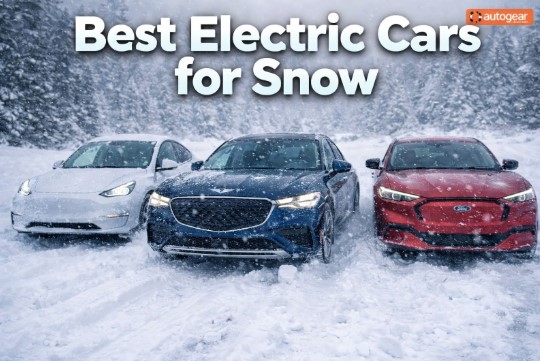
The Tesla Model Y consistently ranks as one of the best electric cars for snow due to its dual-motor all-wheel drive system and impressive ground clearance of 6.6 inches. The vehicle’s battery preconditioning system automatically warms the battery when navigating to a Supercharger, but you can also manually activate it for better cold-weather performance.
Owners report that the Model Y handles remarkably well on snow-covered roads, thanks to its low center of gravity and precise traction control. The regenerative braking system automatically adjusts in cold weather to prevent wheel lock-up on slippery surfaces. With an EPA-estimated range of 330 miles in ideal conditions, you can expect around 200-240 miles in winter.
Ford Mustang Mach-E AWD
Ford’s entry into the electric SUV market brings serious winter credentials. The Mustang Mach-E AWD features a sophisticated all-wheel drive system that can shift power between the front and rear wheels in milliseconds. With 5.7 inches of ground clearance, it navigates through moderate snow without difficulty.
The Mach-E includes heated seats, a heated steering wheel, and an efficient heat pump system that helps maintain range in cold weather. The available range of approximately $121 per charge makes it an economical choice for winter driving when properly equipped.
Rivian R1S
For drivers who need maximum capability in severe winter conditions, the Rivian R1S stands out as one of the best electric SUVs for snow. With over 14 inches of ground clearance in its highest setting and a quad-motor all-wheel drive system, this vehicle can handle conditions that would stop most other electric cars.
The R1S features multiple drive modes specifically designed for snow, sand, and off-road conditions. Its air suspension adjusts ride height based on driving conditions, and the independent control of all four wheels provides exceptional traction.

Volkswagen ID.4 AWD Pro
The ID.4 represents an excellent balance of affordability and winter capability. Its dual-motor all-wheel drive system provides confident traction on slippery roads, and the 8.6 inches of ground clearance gives it a genuine SUV stance that helps in deeper snow.
Volkswagen equipped the ID.4 with a heat pump as standard equipment in all-wheel drive models, which significantly helps preserve range during winter months. The spacious interior and practical design make it an ideal family vehicle that doesn’t compromise on cold-weather performance.
Hyundai Ioniq 5 AWD
The Ioniq 5 brings distinctive styling and impressive winter features to the electric vehicle market. Its 6.3 inches of ground clearance might seem modest, but the dual-motor AWD system and advanced traction control make it surprisingly capable in snow and ice.
One standout feature is the vehicle-to-load capability, which allows you to power external devices during winter emergencies. The heat pump system comes standard, and the 800-volt architecture enables rapid charging even in cold weather when many other EVs slow down significantly.


Real-World Winter Performance Considerations
Range Impact During Winter Driving
Understanding realistic winter range expectations helps prevent anxiety and disappointment. A vehicle rated for 300 miles in optimal conditions might deliver only 180-210 miles in harsh winter weather with temperatures well below freezing and heavy heater use.
Several factors compound to create this range reduction. The battery itself loses efficiency in cold temperatures, resistive heating draws substantial power, and denser cold air increases aerodynamic drag. Additionally, winter tires create more rolling resistance than summer or all-season tires, further impacting range.
Charging Challenges in Cold Weather
Cold temperatures don’t just affect driving range; they also slow down charging speeds. Lithium-ion batteries cannot accept charge as quickly when they’re cold, so a charger that might fill your battery to 80% in 30 minutes during summer could take 45-60 minutes in winter.
Preconditioning your battery before arriving at a fast-charging station helps mitigate this issue. Many electric vehicles now include navigation systems that automatically warm the battery when you route to a charging station.


Addressing Common Winter EV Concerns
Electric Cars Stuck in Snow: Separating Myth from Reality
Stories about electric cars getting stuck in snow occasionally circulate online, but the reality is more nuanced. Any vehicle without proper winter tires and adequate ground clearance can get stuck in deep snow, regardless of its power source. The key is choosing an appropriate vehicle for your climate and equipping it properly.
Electric vehicles actually have some advantages when it comes to getting unstuck. The precise torque control allows you to rock the vehicle back and forth more effectively than with a gas engine. Many electric SUVs also offer terrain modes that adjust power delivery specifically for snow and ice conditions.
How Cold Is Too Cold for Electric Cars?
Electric vehicles can operate in extremely cold temperatures, with many models tested and certified for use in temperatures as low as -22°F. However, performance does degrade as temperatures drop. Below -10°F, you’ll notice significantly reduced range and slower charging speeds.
The critical concern isn’t whether the car will work, but rather whether it will meet your daily driving needs with the reduced range. For most drivers in moderate climates where temperatures rarely drop below 0°F, a well-chosen electric vehicle performs admirably throughout winter.
Do Electric Cars Fail in Cold Weather?
The narrative that electric cars fail in cold weather is exaggerated. While early electric vehicles had more significant cold-weather challenges, modern EVs include sophisticated thermal management systems that keep batteries within optimal operating temperatures.
New test reveals electric cars are practically unusable in winter claims make sensational headlines, but real-world experience from thousands of EV owners in cold climates tells a different story. From Norway, where over 80% of new car sales are electric, to Canada and northern states, electric vehicles serve as reliable daily transportation throughout harsh winters.
Specific Model Performance in Winter
Equinox EV Range in Winter
The Chevrolet Equinox EV represents an affordable entry into the electric SUV market, with an EPA-estimated range of up to 319 miles. In winter conditions, owners can expect this to drop to approximately 200-230 miles depending on temperature and driving habits.
The Equinox EV includes a heat pump system and dual-motor all-wheel drive options, making it a capable winter vehicle. Its moderate ground clearance of 6.5 inches handles typical winter road conditions without issue.
Performance of EVs with Heat Pumps
Heat pumps have become increasingly common in electric vehicles, and they make a substantial difference in winter range. Instead of converting electrical energy directly into heat, heat pumps move heat from outside air into the cabin, using far less energy in the process.
Vehicles equipped with heat pumps typically maintain 15-25% better range in cold weather compared to those without this feature. Brands like Hyundai, Kia, Volkswagen, and BMW have made heat pumps standard equipment in many models.
Electric Cars in Extreme Temperature Conditions
Cold Weather vs. Hot Weather Performance
While cold weather gets more attention, extreme heat also affects electric vehicle performance. In temperatures above 95°F, batteries require active cooling, and running the air conditioning draws significant power. However, the range impact in extreme heat is typically less severe than in extreme cold.
Most electric vehicles maintain better efficiency in moderate temperatures between 60-80°F. Both the battery and cabin climate control systems operate most efficiently in this range.
Comparison Table: Top Electric Cars for Snow
| Model | Starting Price | AWD Available | Ground Clearance | Heat Pump | Winter Range Est. |
|---|---|---|---|---|---|
| Tesla Model Y | $47,740 | Standard | 6.6 inches | Optional | 200-240 miles |
| Ford Mustang Mach-E | $42,995 | Yes | 5.7 inches | Standard | 180-220 miles |
| Rivian R1S | $78,000 | Standard | 14+ inches | Standard | 260-300 miles |
| VW ID.4 AWD | $44,995 | Standard | 8.6 inches | Standard | 180-210 miles |
| Hyundai Ioniq 5 | $43,975 | Yes | 6.3 inches | Standard | 190-230 miles |
| Chevy Equinox EV | $34,995 | Yes | 6.5 inches | Standard | 200-230 miles |
Frequently Asked Questions
Q: Can electric cars drive in snow as well as gas cars? Yes, electric cars can drive in snow as well as or better than comparable gas vehicles when properly equipped. The instant torque control and low center of gravity provide advantages in slippery conditions. The key is choosing a model with all-wheel drive and adequate ground clearance, then pairing it with quality winter tires.
Q: How much does cold weather reduce electric car range? Cold weather typically reduces electric car range by 20-40% depending on temperature severity. Temperatures around 20°F might cause a 25% reduction, while extreme cold below 0°F could result in 40% or more range loss. Using a heat pump system and preconditioning helps minimize this impact.
Q: Are electric cars safe to drive in winter storms? Electric cars are as safe as any other vehicle in winter storms when driven responsibly. The precise traction control and stable weight distribution can enhance safety in slippery conditions. However, range limitations mean you should plan trips carefully.
Q: What happens if my electric car runs out of charge in cold weather? If your battery depletes completely, you’ll need a tow to a charging station. However, modern EVs provide multiple warnings as the battery level drops, giving you plenty of time to find a charger.
Q: Do I need winter tires on an electric car with AWD? Yes, all-wheel drive does not replace the need for winter tires. AWD helps you accelerate and climb hills, but winter tires provide the grip necessary for steering and stopping. Even the best electric car for snow and ice needs proper winter tires.


Questions and Answers Section
Q1: Should I warm up my electric car before driving in winter? A: Yes, preconditioning your EV while plugged in is highly recommended. Set your departure time through the vehicle’s app to warm both the cabin and battery using grid power. This preserves your driving range and ensures the battery operates at optimal temperature.
Q2: How do electric cars heat the cabin in winter? A: Electric vehicles use either resistive heating elements or heat pumps to warm the cabin. Heat pumps are significantly more efficient, using 40-60% less energy than resistive heaters. Some models also offer heated seats and steering wheels for targeted comfort.
Q3: Will my electric car charge slower in winter? A: Yes, cold batteries accept charge more slowly. Fast-charging speeds can drop by 30-50% in very cold conditions. However, preconditioning your battery before charging helps maintain faster speeds. Many EVs automatically do this when you navigate to a charging station.
Q4: Can I leave my electric car unplugged in winter? A: You can, but it’s not recommended. When plugged in, the vehicle can maintain optimal battery temperature using grid power instead of depleting the battery. This ensures you start each day with a full charge and a warm cabin.
Final Thoughts on Winter Electric Driving
Choosing the best electric car for snow comes down to matching the vehicle’s capabilities with your specific winter driving needs. Modern electric vehicles have proven themselves in the harshest winter conditions across the globe. While range reduction and charging considerations require some adjustment, the benefits of instant torque, low center of gravity, and sophisticated traction control systems make EVs genuinely capable winter vehicles.
The key is selecting a model with appropriate features for your climate. Prioritize all-wheel drive, adequate ground clearance, and heat pump technology. Pair your chosen vehicle with quality winter tires, and you’ll find that electric cars can be excellent companions throughout the winter months. As battery technology continues to improve and charging infrastructure expands, the minor compromises required for winter EV ownership continue to diminish.