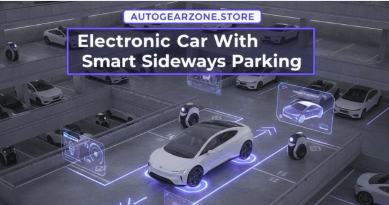
Electronic Car With Smart Sideways Parking: A New Standard for Urban Mobility
|
Getting your Trinity Audio player ready...
|
Electronic Car With Smart Sideways Parking: A New Standard for Urban Mobility
The automotive industry is rapidly shifting toward intelligent automation, and the latest electronic car innovations clearly show where the future is headed. Modern vehicles are no longer defined only by engines and horsepower but by smart electronics, artificial intelligence, and advanced driver assistance systems that simplify everyday driving.
A recently shared video from China highlights this transformation perfectly. A driver activates a smart parking system using a digital card, and the vehicle smoothly slides sideways into a narrow parking space. This feature, once considered futuristic, is now becoming a practical solution for real-world urban challenges.
This article explores how this technology works, why it matters for UK and US drivers, and how smart vehicles are redefining mobility.
Key Takeaways
- Sideways parking solves tight-space urban challenges
- Smart card access improves convenience and security
- AI-driven systems enhance safety and precision
- Futuristic design supports advanced electronics
- Intelligent vehicles reduce daily driving stress
Electronic Car With Smart Sideways Parking: A New Standard for Urban Mobility
The Evolution of Intelligent Vehicle Technology
Cars have evolved from purely mechanical machines into software-driven systems. Today’s vehicles rely on sensors, cameras, and electronic control units to manage steering, braking, and parking with extreme precision.
The modern electronic car integrates these technologies to assist drivers in situations where manual control is difficult or stressful. Parking in congested cities is one of the biggest challenges, and intelligent automation offers a reliable solution.
Why Sideways Parking Changes Urban Driving
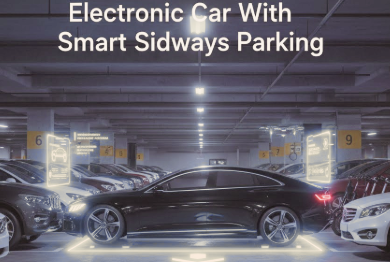
Urban areas across the UK and US face increasing parking pressure. Traditional parking requires space to manoeuvre forward and backward, which is often unavailable.
Sideways parking allows the vehicle to move laterally using electronically controlled wheels. Sensors measure the available space, detect obstacles, and guide the vehicle smoothly into position. The electronic car completes this task with accuracy that removes guesswork and driver anxiety.
Smart Card Access and Digital Vehicle Control
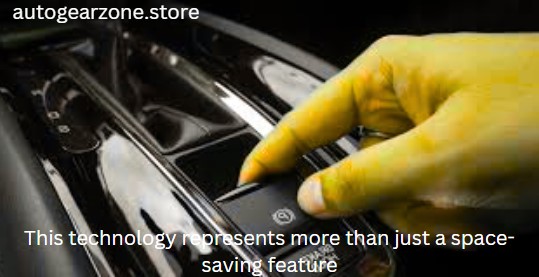
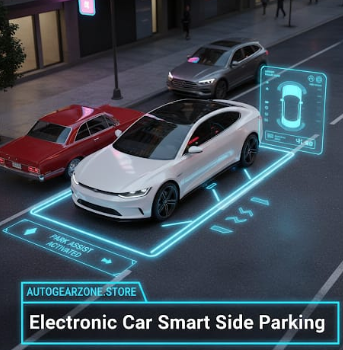
Instead of conventional keys, this vehicle uses a secure smart card system. The card communicates directly with the car’s electronic platform, enabling features such as autonomous parking.
Smart access systems enhance:
- Convenience
- Security
- Integration with mobile and cloud-based platforms
This digital approach makes the electronic car part of a connected lifestyle rather than just a mode of transport.
Exterior Design Built for Technology
The exterior design reflects the advanced systems beneath the surface. A minimalist front profile, aerodynamic curves, and LED lighting create a clean and modern appearance.
These design elements improve efficiency and support electronic systems that rely on precise airflow and sensor placement. The visual identity aligns with the intelligent nature of the electronic car.
Interior Experience and Driver Comfort
Inside the cabin, digital displays replace traditional buttons. Touchscreens, voice commands, and real-time system feedback allow drivers to monitor parking operations and vehicle status easily.
Automation reduces mental load, allowing drivers to focus on safety and comfort rather than complex manoeuvres. The electronic car delivers a calm, refined driving experience.
Safety and Driver Assistance Systems
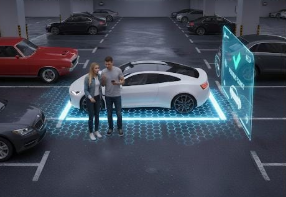
Safety is central to intelligent automation. The vehicle uses:
- 360-degree cameras
- Proximity and motion sensors
- Automatic braking during low-speed manoeuvres
- Collision avoidance algorithms
These systems ensure that automated parking is both accurate and safe. The electronic car continuously analyses its surroundings and adjusts movement instantly.
Environmental Efficiency and Sustainability
Electronic control reduces unnecessary movement and improves energy efficiency. Automated parking minimises wasted power caused by repeated manual attempts.
As emissions standards tighten, the electronic car supports a cleaner, more efficient future aligned with environmental expectations in both the UK and US.
Traditional Vehicle vs Smart Electronic Car
| Feature | Traditional Vehicle | Smart Electronic Car |
|---|---|---|
| Parking Method | Manual | Automated sideways parking |
| Steering System | Mechanical | Electronic |
| Parking Accuracy | Driver-dependent | AI-optimised |
| Urban Suitability | Moderate | Excellent |
| Driver Stress | High | Minimal |
Real-World Benefits for Everyday Drivers
For city commuters, apartment residents, and business users, intelligent parking saves time and reduces frustration. Tight spaces become usable, and parking damage risks are significantly lowered.
The electronic car transforms parking from a daily challenge into a seamless process.
Frequently Asked Questions
What is an electronic car?
An electronic car relies on advanced electronics, sensors, and software to manage driving and automation features.
Is sideways parking practical for daily use?
Yes, it is designed specifically for crowded urban environments.
Does the driver control the parking process?
The system operates autonomously once activated.
Is this technology safe in busy areas?
Yes, multiple sensors and cameras ensure obstacle detection and collision prevention.
Will this technology become common in future cars?
Yes, it is expected to become standard as adoption increases.
Final Thoughts
The electronic car featured here represents a major step toward smarter, safer, and more efficient mobility. With intelligent parking, smart access, and advanced safety systems, it sets a new benchmark for modern driving.
For urban drivers and technology-focused consumers, this innovation is not just impressiveit is practical, necessary, and future-ready.